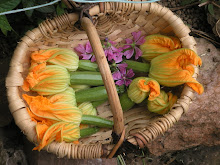
Another dose of truth from one of my heroes! From August this year, but covers all bases and tells it like it is.
Thursday, December 2, 2010


Wednesday, December 1, 2010
Teaching
I'm really enjoying the teaching, and it helps that everyone wants to learn. I've ended up teaching 8 hours a week at the biggest school in Nablus, two hours with the teachers, and six hours with three classes of young boys, aged from 10-13.
The Headmaster and the Principal sat in on the teachers' lesson last week, and we went through some idioms. He was at a disadvantage immediately, as the other teachers are fluent, and his English is patchy, but he was filled with good humour, and laughed when he didn't know the answer. Today we went over phrasal verbs, and they guessed them all!
This is one of the plum jobs in Nablus, and these teachers are le creme de la creme, achieving more than 90% in their University exams. We chat about all sorts, and I'm impressed by their breadth of knowledge of the language. Many of them have two passports, Palestinian and Jordanian, and they can travel, whereas many other locals cannot. With the children I've been going over the present continuous this week, moving on to the simple past next week. They're lively but nice boys: 35 to a class.
Other lessons include a new one, three times a week at one of the Refugee camps, 'New Askar', which I'll be starting on Saturday afternoon. I still travel out to Tulkarm during the day on a Saturday, to a Community Centre, and there are the two lessons a week at the local Womens' Centre. Finally there's my 'private' student, three times a week where I go to his home, and try to make English into more of a living language, rather than the dry texts he has in his school books. His mother is a Social Worker, and the family are very nice. I've been invited to the country with them on Friday.
The Headmaster and the Principal sat in on the teachers' lesson last week, and we went through some idioms. He was at a disadvantage immediately, as the other teachers are fluent, and his English is patchy, but he was filled with good humour, and laughed when he didn't know the answer. Today we went over phrasal verbs, and they guessed them all!
This is one of the plum jobs in Nablus, and these teachers are le creme de la creme, achieving more than 90% in their University exams. We chat about all sorts, and I'm impressed by their breadth of knowledge of the language. Many of them have two passports, Palestinian and Jordanian, and they can travel, whereas many other locals cannot. With the children I've been going over the present continuous this week, moving on to the simple past next week. They're lively but nice boys: 35 to a class.
Other lessons include a new one, three times a week at one of the Refugee camps, 'New Askar', which I'll be starting on Saturday afternoon. I still travel out to Tulkarm during the day on a Saturday, to a Community Centre, and there are the two lessons a week at the local Womens' Centre. Finally there's my 'private' student, three times a week where I go to his home, and try to make English into more of a living language, rather than the dry texts he has in his school books. His mother is a Social Worker, and the family are very nice. I've been invited to the country with them on Friday.
The Milkman cometh...
Early in the mornings, when Nablus is just waking up, there is a man who tours the streets, shouting something monosyllabic in Arabic. I often heard him, and wondered what he was saying.
I found out the other day: a man and his donkey come round the streets, the animal laden with baskets full of fresh milk. Presumably he rides in from the surrounding hills, and the milk must be either donkey or goat's milk, as I haven't seen any cows. The man is poorly dressed, but the donkey is in good condition, and he manages to sell all of his milk in this area, which is one of the more affluent areas of the city.
On a trip to Jericho a few weeks ago, I spotted some Bedhouin encampments, and was impressed by their spartan living conditions: ripped black and off-white canvases, stretched over bendy poles, in the manner of yurts. There were a couple of water tanks, presumably a modern consession to desert living, but otherwise they were living with even less than what I consider to be the bare essentials. There were herds of sheep, and the occasional goat, but no grass.
I was struck again by the drastic simplicity of their lives, and how they seemed from another age. Which of course they are.
I found out the other day: a man and his donkey come round the streets, the animal laden with baskets full of fresh milk. Presumably he rides in from the surrounding hills, and the milk must be either donkey or goat's milk, as I haven't seen any cows. The man is poorly dressed, but the donkey is in good condition, and he manages to sell all of his milk in this area, which is one of the more affluent areas of the city.
On a trip to Jericho a few weeks ago, I spotted some Bedhouin encampments, and was impressed by their spartan living conditions: ripped black and off-white canvases, stretched over bendy poles, in the manner of yurts. There were a couple of water tanks, presumably a modern consession to desert living, but otherwise they were living with even less than what I consider to be the bare essentials. There were herds of sheep, and the occasional goat, but no grass.
I was struck again by the drastic simplicity of their lives, and how they seemed from another age. Which of course they are.
Project Hope 1.12.10
The ethic of Project Hope is a good one: bring free language lessons to those that most need it and cannot afford it, here in Palestine, by welcoming volunteers from all over the world who are willing to spend some of their time in this fascinating part of the world.
I found out recently that it's the biggest NGO (Non-Governmental Organisation) in Nablus, and was the only one to remain functioning during the Intifada. Unlike a lot of NGO's, or UN Offices, there are no fancy cars, no flashy expense accounts and no jolly-ups. What I was expecting before I came has turned out to be true 'on the ground' as it were, and I think they are doing a great job.
They do not affiliate with either political party here, and try to stay focussed on the objective of bringing the outside world here whilst at the same time giving the children of Palestine contact with the wider world. There is a 'blog club' for children, getting young kids here (who like kids everywhere are computer literate) in contact with kids elsewhere, in schools and youth clubs.
There are art classes, where the work done in the classroom is transferred to large wall murals and playgrounds, and there are drama and music classes. One teacher who used to work for Project Hope has found a paying job in the town, and now works 6 hours a week and is able to support himself on that. He's also trying to get a music school going.
Recently PH received a donation of some brand-new computers. This was a very generous gift on the part of someone, but in fact there were already enough computers, so they have been set-up in one of the classrooms, awaiting extra students who will use them. That's one of the things I've been surprised about: the internet access and mobile telephone prevalence: everyone is 'connected', and everyone is on Facebook!
Like so many organisations, however, they're feeling the pinch financially, and the Director said he'd rather have had the money to pay wages than the computers: there are four local paid staff, who co-ordinate everything. The local Authority, however, are always mindful of being accused of encouraging or harbouring undesirables, so cash donations are frowned upon. As a consequence Project Hope, like so many other grass-roots organisations, struggles on from month to month.
There is a book wish-list, on Amazon, for books that they'd like to receive and which get put in the Library. Self-appointed Librarian: yours truly, and I've very much enjoyed sorting through all of the books, pamphlets and leaflets, sorting the teaching material from the Palestinian information, the latter making grim reading with titles covering the gamut of information about life under occupation. Some shocking photographs in those booklets. Whole forests must have been cut down to write these voluminous tomes on torture, the wall, prison, water shortages, agriculture, etc. 60 years on...
The teaching books, however, are very welcome: they now have quite a well-stocked library with the classic titles that every TEFL teacher uses as a bible. There are books on teaching languages to children, ideas for games, songs, stories, creative writing, etc. There is quite a large section on French, language and literature, and with the French Cultural Centre next-door, it has been a real boon to speak French. Some of the local volunteers have decided to focus on French as opposed to English as their second language, so I can happily chat to both sides. One local volunteer is learning Hebrew. When I made a polite request as to why, he told me he had been in prison 9 times and thought it about time he learnt what he was being accused of.
Anyway, after one particularly interesting conversation with the Director, we at Le Guerrat have come up with a project proposal: to have a pre-Palestine training week for Internatioanl volunteers at our house, to include a briefing on Project Hope, the situation here, things they should think about, plus TEFL training, lesson plans and teacher role-play. I think Le Guerrat lends itself to such a course, and although logistically and financially it may be problematic, the Director and I thought that it would be useful for the volunteers to have a good idea of what is expected of them before they arrive. That way they could hopefully arrive in Nablus ready to teach, and with less culture shock. I was surpised to find out, during the interviews I've been conducting, that for many this is their first experience of an Islamic culture, and some volunteers are as young as 20.
I found out recently that it's the biggest NGO (Non-Governmental Organisation) in Nablus, and was the only one to remain functioning during the Intifada. Unlike a lot of NGO's, or UN Offices, there are no fancy cars, no flashy expense accounts and no jolly-ups. What I was expecting before I came has turned out to be true 'on the ground' as it were, and I think they are doing a great job.
They do not affiliate with either political party here, and try to stay focussed on the objective of bringing the outside world here whilst at the same time giving the children of Palestine contact with the wider world. There is a 'blog club' for children, getting young kids here (who like kids everywhere are computer literate) in contact with kids elsewhere, in schools and youth clubs.
There are art classes, where the work done in the classroom is transferred to large wall murals and playgrounds, and there are drama and music classes. One teacher who used to work for Project Hope has found a paying job in the town, and now works 6 hours a week and is able to support himself on that. He's also trying to get a music school going.
Recently PH received a donation of some brand-new computers. This was a very generous gift on the part of someone, but in fact there were already enough computers, so they have been set-up in one of the classrooms, awaiting extra students who will use them. That's one of the things I've been surprised about: the internet access and mobile telephone prevalence: everyone is 'connected', and everyone is on Facebook!
Like so many organisations, however, they're feeling the pinch financially, and the Director said he'd rather have had the money to pay wages than the computers: there are four local paid staff, who co-ordinate everything. The local Authority, however, are always mindful of being accused of encouraging or harbouring undesirables, so cash donations are frowned upon. As a consequence Project Hope, like so many other grass-roots organisations, struggles on from month to month.
There is a book wish-list, on Amazon, for books that they'd like to receive and which get put in the Library. Self-appointed Librarian: yours truly, and I've very much enjoyed sorting through all of the books, pamphlets and leaflets, sorting the teaching material from the Palestinian information, the latter making grim reading with titles covering the gamut of information about life under occupation. Some shocking photographs in those booklets. Whole forests must have been cut down to write these voluminous tomes on torture, the wall, prison, water shortages, agriculture, etc. 60 years on...
The teaching books, however, are very welcome: they now have quite a well-stocked library with the classic titles that every TEFL teacher uses as a bible. There are books on teaching languages to children, ideas for games, songs, stories, creative writing, etc. There is quite a large section on French, language and literature, and with the French Cultural Centre next-door, it has been a real boon to speak French. Some of the local volunteers have decided to focus on French as opposed to English as their second language, so I can happily chat to both sides. One local volunteer is learning Hebrew. When I made a polite request as to why, he told me he had been in prison 9 times and thought it about time he learnt what he was being accused of.
Anyway, after one particularly interesting conversation with the Director, we at Le Guerrat have come up with a project proposal: to have a pre-Palestine training week for Internatioanl volunteers at our house, to include a briefing on Project Hope, the situation here, things they should think about, plus TEFL training, lesson plans and teacher role-play. I think Le Guerrat lends itself to such a course, and although logistically and financially it may be problematic, the Director and I thought that it would be useful for the volunteers to have a good idea of what is expected of them before they arrive. That way they could hopefully arrive in Nablus ready to teach, and with less culture shock. I was surpised to find out, during the interviews I've been conducting, that for many this is their first experience of an Islamic culture, and some volunteers are as young as 20.
Tuesday, November 30, 2010
Wikileaks(2)
So, we learn this morning that North Korea has minerals...
...which means of course that what Wiki are releasing could damage diplomacy everywhere! I've worked for the British Foreign Office, in the bowels of the Embassy in Paris, and I know some of the secrets we'd like to keep secret. I had to sign the Official Secrets Act four times, and was cleared up to Top Secret. Did you know, for example, that there's a huge incinerator underneath the Embassy, where documents are burned? I know, because it was part of my duties to burn documents, and we had to come in wearing old clothes.
But it's mostly 'boring' old colonial territorial disputes, about which Old Power gets what, and everyone keeps quiet about it 'in the name of National Security'. This is probably what started me on the road to cynicism, and I was one of the few people to resign, as working for the FCO was a gravy train, and no-one likes to upset the apple-cart, if you'll excuse the mixed metaphores.
So that lovely Hilary Clinton is strutting the world stage saying how awful this all is, and we should all be concerned. See above. Very trustworthy lady, especially if you fancy looking into the Clintons' past and the Mena controversy...
http://video.google.com/videoplay?docid=-8681225708920427234#docid=7349140906801270904
...which means of course that what Wiki are releasing could damage diplomacy everywhere! I've worked for the British Foreign Office, in the bowels of the Embassy in Paris, and I know some of the secrets we'd like to keep secret. I had to sign the Official Secrets Act four times, and was cleared up to Top Secret. Did you know, for example, that there's a huge incinerator underneath the Embassy, where documents are burned? I know, because it was part of my duties to burn documents, and we had to come in wearing old clothes.
But it's mostly 'boring' old colonial territorial disputes, about which Old Power gets what, and everyone keeps quiet about it 'in the name of National Security'. This is probably what started me on the road to cynicism, and I was one of the few people to resign, as working for the FCO was a gravy train, and no-one likes to upset the apple-cart, if you'll excuse the mixed metaphores.
So that lovely Hilary Clinton is strutting the world stage saying how awful this all is, and we should all be concerned. See above. Very trustworthy lady, especially if you fancy looking into the Clintons' past and the Mena controversy...
http://video.google.com/videoplay?docid=-8681225708920427234#docid=7349140906801270904
Monday, November 29, 2010
BP
First Matt Simmons...
https://secure.wikimedia.org/wikipedia/en/wiki/Matthew_Simmons
Now another death of a witness:
http://www.youtube.com/watch?v=x4-7lgxATiU&feature=player_embedded
If you haven't read 'Confessions of an Economic Hit-man', by John Perkins, I recommend it. Here he talks about his motivations...
http://www.youtube.com/watch?v=yTbdnNgqfs8
https://secure.wikimedia.org/wikipedia/en/wiki/Matthew_Simmons
Now another death of a witness:
http://www.youtube.com/watch?v=x4-7lgxATiU&feature=player_embedded
If you haven't read 'Confessions of an Economic Hit-man', by John Perkins, I recommend it. Here he talks about his motivations...
http://www.youtube.com/watch?v=yTbdnNgqfs8
Wikileaks
"Last night I slept the sleep of the saved" is allegedly a quote by that British National 'Treasure' Churchill. It was attributed to him when he finally heard that the US were going to join the war effort. Mind you, he also said "History will be kind to me, as I'm going to write it", going to prove once again that you cannot believe everything you read.
However, listening to the World Service last night, as I fell asleep, I thought to myself that finally the truth is coming out, as all the frantic attempts by the US Administration to muzzle Wikileaks, and to malign the founder's character, had failed, and pouring out of their interior memos and e-mails came truths about the various conflicts and wars they are involved in around the world. We are no better, of course, and I sincerely believe that as more pressure gets put on people who have held secrets they shouldn't have for too long, we will start to learn the cold, hard reality of what is really going on, internationally. Use of the terms 'security' and 'terrorist' will become obvious to even the most patriotic as excuses for much darker realities.
The wars and invasions occurring at the moment are mostly resource wars: that is to say, the country of choice has something that we want or need, whether it is oil in Iraq, minerals or heroin in Afghanistan, coltan and other minerals in the Congo, oil in the Niger Delta, oil off Haiti, oil in Darfur and oil plus a strategic location as with Yemen. Even the most tightly shut eyes of those who just want to live quietly will be prized open, as the heat gets nearer and nearer to home. We will only start to sit up and notice when our lights start going out, and our financial lives are affected. Shame on us.
The issue is still, and has been for a few decades, energy. There is not enough fossil-fuel based energy to maintain the exponential curve of energy use that our modern-day industrial civilisation requires, and we are willing to have a second scramble for Africa, and everywhere else, in order to try to satiate our unquenchable thirst. But as the Tesla-inspired 'free-energy' is not yet available (at least to the majority, even if its secrets are kept for the few) we are obliged to continue our plunder of this small planet for its scarce natural resources. Resources that were laid down over millennia, and which are being gobbled up in just over 100 years.
http://www.worldoil.com/Haiti_could_have_larger_oil_reserves_than_Venezuela.html
However, listening to the World Service last night, as I fell asleep, I thought to myself that finally the truth is coming out, as all the frantic attempts by the US Administration to muzzle Wikileaks, and to malign the founder's character, had failed, and pouring out of their interior memos and e-mails came truths about the various conflicts and wars they are involved in around the world. We are no better, of course, and I sincerely believe that as more pressure gets put on people who have held secrets they shouldn't have for too long, we will start to learn the cold, hard reality of what is really going on, internationally. Use of the terms 'security' and 'terrorist' will become obvious to even the most patriotic as excuses for much darker realities.
The wars and invasions occurring at the moment are mostly resource wars: that is to say, the country of choice has something that we want or need, whether it is oil in Iraq, minerals or heroin in Afghanistan, coltan and other minerals in the Congo, oil in the Niger Delta, oil off Haiti, oil in Darfur and oil plus a strategic location as with Yemen. Even the most tightly shut eyes of those who just want to live quietly will be prized open, as the heat gets nearer and nearer to home. We will only start to sit up and notice when our lights start going out, and our financial lives are affected. Shame on us.
The issue is still, and has been for a few decades, energy. There is not enough fossil-fuel based energy to maintain the exponential curve of energy use that our modern-day industrial civilisation requires, and we are willing to have a second scramble for Africa, and everywhere else, in order to try to satiate our unquenchable thirst. But as the Tesla-inspired 'free-energy' is not yet available (at least to the majority, even if its secrets are kept for the few) we are obliged to continue our plunder of this small planet for its scarce natural resources. Resources that were laid down over millennia, and which are being gobbled up in just over 100 years.
http://www.worldoil.com/Haiti_could_have_larger_oil_reserves_than_Venezuela.html
Sunday, November 28, 2010
Thanksgiving
All of the Internationals got together last week for a meal, provided by our sole American volunteer. She obtained a turkey and all the trimmings, and a vegetarian option was also provided. Another volunteer went to the Samaritan village a way from here and provided some red wine from Bethlehem. For many of us, it was the first alcohol that had passed our lips since we had arrived.
I'm not sure of the history of this festival, not being too interested in hyped-up opportunities for mass-consumerism, but one of our two German volunteers quipped, in good humour 'so, we're celebrating genocide now, are we?'. My limited knowledge of the history of the creation of the USA stretches far enough to know that the territorial rights of the original inhabitants were not exactly respected. Same can be said for the Aborigines in Australia, who are now also living in 'reserves' (read camps) and to a certain extent the Mauris in New Zealand. I've just finished reading a book about the first arrival of British convicts in what is now called Sydney, on how the locals tried to stop the colonisation of the riversides, where they had hunted and gathered for millennia, to no avail.
The most memorable quote of the evening has to go to the other German, however. Going round the table, we all had to give thanks to something or someone. Quite a few poignant, funny or sad comments, until we got to Jonas who said: "I give thanks to gravity, without which we wouldn't all be sitting here".
I'm not sure of the history of this festival, not being too interested in hyped-up opportunities for mass-consumerism, but one of our two German volunteers quipped, in good humour 'so, we're celebrating genocide now, are we?'. My limited knowledge of the history of the creation of the USA stretches far enough to know that the territorial rights of the original inhabitants were not exactly respected. Same can be said for the Aborigines in Australia, who are now also living in 'reserves' (read camps) and to a certain extent the Mauris in New Zealand. I've just finished reading a book about the first arrival of British convicts in what is now called Sydney, on how the locals tried to stop the colonisation of the riversides, where they had hunted and gathered for millennia, to no avail.
The most memorable quote of the evening has to go to the other German, however. Going round the table, we all had to give thanks to something or someone. Quite a few poignant, funny or sad comments, until we got to Jonas who said: "I give thanks to gravity, without which we wouldn't all be sitting here".
Teds'R'us
My parents are incredible! They are 80 and 84 years old, and yesterday went out in minus 2 temperatures to a Craft Fair, where they set up a stall selling their hand-made crafts. Since retirement 20 years ago, they've been cutting, shaping, planing, varnishing, stitching, recycling, and sowing so many original and sturdy crafts, that they have become mini-celebrities in the area.
Schools telephone them when they're having Xmas Fayres, Community Centres know them, and they even set up their stall in old people's homes sometimes! They are both hard-working, honest, salt-of-the-earth types, and they have an incredible set of skills between them. Oh, and in their spare time they make bread (my Dad was a baker), cakes, quiches, jams...
I've often thought that the way we were brought up set us up for life, and my brother and I have had varied and interesting lives full of energy and originality. I applaud my parents.
Oh, and if you want a Ted for Christmas, let me know...
Schools telephone them when they're having Xmas Fayres, Community Centres know them, and they even set up their stall in old people's homes sometimes! They are both hard-working, honest, salt-of-the-earth types, and they have an incredible set of skills between them. Oh, and in their spare time they make bread (my Dad was a baker), cakes, quiches, jams...
I've often thought that the way we were brought up set us up for life, and my brother and I have had varied and interesting lives full of energy and originality. I applaud my parents.
Oh, and if you want a Ted for Christmas, let me know...
Saturday, November 27, 2010
Freedom Theatre, Jenin
Yesterday was our day off, and a group of us wanted to visit Jenin and try to get to see the Theatre that had been mentioned in the film we saw the other night (Anya's Children, see Project Hope entry of 22.11.10).
We took a service taxi from Nablus, and wound north through the dry countryside in an hour's journey to Jenin. It being a Friday, everything was closed, with the odd exception. We had three local volunteers with us, and one of them knew a good falafel joint: we headed straight there. These falafels were oblong, as opposed to round, and outside we saw the man making them: a slightly bigger version of the machine I bought in the Souk, and he managed to squeeze onions into the middle of the chick-pea mix. They were very good.
There were no road-blocks, as such, but there was an Israeli Army armoured personnel carrier (APC) at the bottom of a new road, leading to a settlement behind a high barbed-wire wall. The soldiers were relaxed, laughing with a girl who sat in the APC front seat, but they still wore full battle fatigues and carried machine guns. The roads to the new settlements are always manned by the Israeli Army, as they are so controversial and not at all welcome - especially as they are viewed as illegal internationally, they have commandeered strategic hills, are taking local water and of course land farmed by locals for centuries. There is a lot of local resentment, and a feeling that Israel wants to divide what is left of Palestine, or the West Bank, up into cantons where you cannot cross from one area to another.
With full bellies we headed into the town itself, to try to find the refugee camp and the theatre. There were hundreds of kids, and they followed us everywhere, shouting 'how are you?' 'what is your name?'. We got to the refugee camp, which was again like an extension of the town itself, being as it was a warren of tiny streets and alleys, with two-storey buildings in grey concrete. The walls were full of graffitti, and we got a local to translate: often it was the names of martyrs, that is to say locals who were killed in the fighting.
It felt strange to be walking along these streets, under the hot sun, where just a few years earlier tanks had rolled, homes were crushed and many people were killed. It took a while for us to realise that every wall was pock-marked by bullet holes, not just the occasional one or two. The now-familiar posters flapping in the breeze of the locals who died in the conflict. We didn't feel too comfortable, a big group of Westerners coming to stare, so we didn't stay long and headed for the theatre.
Once there we were pleasantly surprised, as in the film, Arna's Children, the Theatre had been completely destroyed by shells: I suppose it was seen as a terrorist strong-hold. It had been completely re-built on a different site, and was much larger than I had anticipated. We then had a stroke of luck, as at that moment an International volunteer strolled around the corner. He wasn't expecting to see us at all, as we had come without any arrangements. But he was hospitality itself, and invited us in and made us all a coffee.
He had been here (to Palestine) several times before, funding himself by being a carpenter back home in Wales. He then gave us a talk about the progress of the Theatre since the events in the film, and we were thrilled to hear that they had received International recognition, funding and had actually toured Austria and Germany with one of their productions, selling out all tickets within 40 days, which is amazing.
The son of Arna, a Jewish Film Director, is still very much involved with the Theatre, and they are putting on a production of 'Alice in Wonderland' soon. They had done a production of Orwell's 'Animal Farm', which was pretty poignant. I recommend this book to everyone, along with '1984' and Huxley's 'Brave New World'.
After a tour of the Theatre we watched three short film clips, giving us an idea of what they do and why they are here. They were very powerful films, one of them being 'Fragments of Palestine'. There are no psychologists or psychotherapists here in Jenin, and the Theatre is the only way the children here can be creative and express themselves, and sometimes their frustrations and troubled past. The students themselves were talking to camera, and were eloquent and intelligent, if sad.
Here's the link, for anyone interested:
http://www.thefreedomtheatre.org/
We took a service taxi from Nablus, and wound north through the dry countryside in an hour's journey to Jenin. It being a Friday, everything was closed, with the odd exception. We had three local volunteers with us, and one of them knew a good falafel joint: we headed straight there. These falafels were oblong, as opposed to round, and outside we saw the man making them: a slightly bigger version of the machine I bought in the Souk, and he managed to squeeze onions into the middle of the chick-pea mix. They were very good.
There were no road-blocks, as such, but there was an Israeli Army armoured personnel carrier (APC) at the bottom of a new road, leading to a settlement behind a high barbed-wire wall. The soldiers were relaxed, laughing with a girl who sat in the APC front seat, but they still wore full battle fatigues and carried machine guns. The roads to the new settlements are always manned by the Israeli Army, as they are so controversial and not at all welcome - especially as they are viewed as illegal internationally, they have commandeered strategic hills, are taking local water and of course land farmed by locals for centuries. There is a lot of local resentment, and a feeling that Israel wants to divide what is left of Palestine, or the West Bank, up into cantons where you cannot cross from one area to another.
With full bellies we headed into the town itself, to try to find the refugee camp and the theatre. There were hundreds of kids, and they followed us everywhere, shouting 'how are you?' 'what is your name?'. We got to the refugee camp, which was again like an extension of the town itself, being as it was a warren of tiny streets and alleys, with two-storey buildings in grey concrete. The walls were full of graffitti, and we got a local to translate: often it was the names of martyrs, that is to say locals who were killed in the fighting.
It felt strange to be walking along these streets, under the hot sun, where just a few years earlier tanks had rolled, homes were crushed and many people were killed. It took a while for us to realise that every wall was pock-marked by bullet holes, not just the occasional one or two. The now-familiar posters flapping in the breeze of the locals who died in the conflict. We didn't feel too comfortable, a big group of Westerners coming to stare, so we didn't stay long and headed for the theatre.
Once there we were pleasantly surprised, as in the film, Arna's Children, the Theatre had been completely destroyed by shells: I suppose it was seen as a terrorist strong-hold. It had been completely re-built on a different site, and was much larger than I had anticipated. We then had a stroke of luck, as at that moment an International volunteer strolled around the corner. He wasn't expecting to see us at all, as we had come without any arrangements. But he was hospitality itself, and invited us in and made us all a coffee.
He had been here (to Palestine) several times before, funding himself by being a carpenter back home in Wales. He then gave us a talk about the progress of the Theatre since the events in the film, and we were thrilled to hear that they had received International recognition, funding and had actually toured Austria and Germany with one of their productions, selling out all tickets within 40 days, which is amazing.
The son of Arna, a Jewish Film Director, is still very much involved with the Theatre, and they are putting on a production of 'Alice in Wonderland' soon. They had done a production of Orwell's 'Animal Farm', which was pretty poignant. I recommend this book to everyone, along with '1984' and Huxley's 'Brave New World'.
After a tour of the Theatre we watched three short film clips, giving us an idea of what they do and why they are here. They were very powerful films, one of them being 'Fragments of Palestine'. There are no psychologists or psychotherapists here in Jenin, and the Theatre is the only way the children here can be creative and express themselves, and sometimes their frustrations and troubled past. The students themselves were talking to camera, and were eloquent and intelligent, if sad.
Here's the link, for anyone interested:
http://www.thefreedomtheatre.org/
Friday, November 26, 2010
Win-Win for Israel
Either you agree to 90-day freeze on settlements (except East Jerusalem) and we give you lots of money and military equipment, or you carry on with settlements and get more land:
http://www.globalresearch.ca/index.php?context=va&aid=22112
What I want to know is, what have they got over Obama?
http://www.globalresearch.ca/index.php?context=va&aid=22112
What I want to know is, what have they got over Obama?
Thursday, November 25, 2010
Sovereign Debt Crises
Well, we were warned about the money lenders, weren't we? Something in the Bible, and quite a few publications since. If you listen to the BBC you'd think these sovereign debt crises were a sudden turn of events and that some naughty countries borrowed too much and they now have to tighten their belts in order to pay back what they owe. Oh yes, and pensions and hospitals and schools and social services are too pricy to be maintained.
I'm sorry, I don't see it like that. Some of my friends laugh at my avid interest in reading blogs, but this is where some of the best minds in the business write, be it economic, political, ecological or other, and I've been following what they've been saying and warning about for years.
Goldman Sachs had a huge part to play in the downfall of Greece, similar amounts of collusion and bribery went into money-laundering and creating an economic boom-to-bust situation in Ireland, soon to be followed by Portugal, Spain, and maybe Italy. Ireland's economy went through the roof without it producing anything new. It is being sold to us as a simple parallel to an individual or family over-stretching themselves, but if you followed the sub-prime mortgage crisis in the US (the so-called 'foreclosure-gate') you'll have some idea of the depth and breadth of the corruption in the banking sector.
The UK also has severe financial problems, but bizarrely has been offered a secret bail-out by someone who presumably doesn't want to see Sterling fail. A very odd entry in Hansard (the official record of events in both Houses of Parliament) given by Baron James of Blackheath, speaks of the offer of a sum of money to be given to the Crown by a shadowy organisation that he called ' Foundation X'. You really couldn't make this stuff up! Have a look:
http://en.wikipedia.org/wiki/David_James,_Baron_James_of_Blackheath
http://www.publications.parliament.uk/pa/ld201011/ldhansrd/text/101101-0003.htm#10110215000101
(see 1538, although earlier part of speech is also interesting, about coming food crisis)
If you scroll down on the Wiki page , you will see the entry 'Foundation X', and then see that after his speech in the House of Lords, the meeting he spoke of was denied by the UK Treasury.
Still think this is all a cock-up, or is it a criminal conspiracy?
I'm sorry, I don't see it like that. Some of my friends laugh at my avid interest in reading blogs, but this is where some of the best minds in the business write, be it economic, political, ecological or other, and I've been following what they've been saying and warning about for years.
Goldman Sachs had a huge part to play in the downfall of Greece, similar amounts of collusion and bribery went into money-laundering and creating an economic boom-to-bust situation in Ireland, soon to be followed by Portugal, Spain, and maybe Italy. Ireland's economy went through the roof without it producing anything new. It is being sold to us as a simple parallel to an individual or family over-stretching themselves, but if you followed the sub-prime mortgage crisis in the US (the so-called 'foreclosure-gate') you'll have some idea of the depth and breadth of the corruption in the banking sector.
The UK also has severe financial problems, but bizarrely has been offered a secret bail-out by someone who presumably doesn't want to see Sterling fail. A very odd entry in Hansard (the official record of events in both Houses of Parliament) given by Baron James of Blackheath, speaks of the offer of a sum of money to be given to the Crown by a shadowy organisation that he called ' Foundation X'. You really couldn't make this stuff up! Have a look:
http://en.wikipedia.org/wiki/David_James,_Baron_James_of_Blackheath
http://www.publications.parliament.uk/pa/ld201011/ldhansrd/text/101101-0003.htm#10110215000101
(see 1538, although earlier part of speech is also interesting, about coming food crisis)
If you scroll down on the Wiki page , you will see the entry 'Foundation X', and then see that after his speech in the House of Lords, the meeting he spoke of was denied by the UK Treasury.
Still think this is all a cock-up, or is it a criminal conspiracy?
Nablus Chamber of Commerce and Industry
Last night a talk was arranged by Project Hope by the Head of the Nablus CCI. He gave us a slide presentation with some local statistics, mixed with some photographs. Less than 2% of businesses employed more than 10 people!
In what could be perceived as a dry presentation, the figures were actually terribly revealing, and we could see at a glance what a difference the Intifada/blockade of the West Bank made to the economy of the area. Even now, when the blockade is partially lifted, there are still road-blocks and checks, and many, many restrictions on moving goods around Palestine, let alone export problems.
He mentioned the difficulties of getting your lorry-load of goods to the Ports, and then having the constraint of no Palestinian export representative at the Port, so having to provide all of the necessary documentation to the Israeli Authorities, which includes papers on security, destinations, etc, and entails complete un-loading and re-loading of the goods onto pallets of a certain size.
Add to this problem one of the restrictions on imports - aluminium, for example - plus taxes and levies applied by Israel, and you begin to get a tiny picture of the difficulties of getting this economy on its feet again. He explained that although they sincerely want to start exporting, it is often prohibitively expensive and so they sell to Israel, who then ship the goods out as Israeli. They are working to correct this, he told us, so that at least Palestinian goods, such as olive oil and soap, are labeled as such.
One of their best exports, however, is stone. He was understandably proud of this, and said that it is exported to Europe. Presumably this is a product which is less problematic to transport, as it can pretty easily be cleared by 'security'. One of my main concerns, however, is that this is exactly the wrong sort of export as it is totally unsustainable - I had already noticed on my trips to Tulkarem the huge quarries, with large amounts of machinery. The surrounding area was covered in a fine white powdery dust, and the lorries were plying back and forth. The saddest sight of all, for me, was to see the Palestinians earnestly trying to improve their local economy by literally blasting and removing their only asset: the hills and the land around Nablus.
It no doubt brings in a few shekels, and no doubt there is a demand because it is reasonably priced, but once these hills are gone, what next? The West Bank is small enough already, without this geological suicide.
In what could be perceived as a dry presentation, the figures were actually terribly revealing, and we could see at a glance what a difference the Intifada/blockade of the West Bank made to the economy of the area. Even now, when the blockade is partially lifted, there are still road-blocks and checks, and many, many restrictions on moving goods around Palestine, let alone export problems.
He mentioned the difficulties of getting your lorry-load of goods to the Ports, and then having the constraint of no Palestinian export representative at the Port, so having to provide all of the necessary documentation to the Israeli Authorities, which includes papers on security, destinations, etc, and entails complete un-loading and re-loading of the goods onto pallets of a certain size.
Add to this problem one of the restrictions on imports - aluminium, for example - plus taxes and levies applied by Israel, and you begin to get a tiny picture of the difficulties of getting this economy on its feet again. He explained that although they sincerely want to start exporting, it is often prohibitively expensive and so they sell to Israel, who then ship the goods out as Israeli. They are working to correct this, he told us, so that at least Palestinian goods, such as olive oil and soap, are labeled as such.
One of their best exports, however, is stone. He was understandably proud of this, and said that it is exported to Europe. Presumably this is a product which is less problematic to transport, as it can pretty easily be cleared by 'security'. One of my main concerns, however, is that this is exactly the wrong sort of export as it is totally unsustainable - I had already noticed on my trips to Tulkarem the huge quarries, with large amounts of machinery. The surrounding area was covered in a fine white powdery dust, and the lorries were plying back and forth. The saddest sight of all, for me, was to see the Palestinians earnestly trying to improve their local economy by literally blasting and removing their only asset: the hills and the land around Nablus.
It no doubt brings in a few shekels, and no doubt there is a demand because it is reasonably priced, but once these hills are gone, what next? The West Bank is small enough already, without this geological suicide.
Subscribe to:
Posts (Atom)